Picture this: It's 2019, and I'm sitting cross-legged on my bedroom floor at 2 AM, surrounded by crumpled sketches and empty energy drink cans. My laptop screen glows with yet another iteration of what would become my first indie game prototype. But here's the thing—I wasn't staying up because I was chasing fame or fortune in the gaming industry. I was staying up because I had just witnessed something that would fundamentally change how I see the power of interactive media.
Three weeks earlier, my younger brother Miguel—the kid who could barely order pizza over the phone without stuttering—had just led a 20-person raid in Final Fantasy XIV with the confidence of a seasoned general. He was calling out strategies, encouraging teammates, and somehow managing to be the social glue that held our entire guild together. This was the same brother who spent most family dinners hiding behind his phone, avoiding eye contact like it was radioactive.
That moment sparked something in me that I couldn't ignore. Games weren't just entertainment—they were connection machines, empathy engines, and confidence builders wrapped in pixels and code. But here's where it gets interesting: despite this incredible potential, most games seemed designed to exploit rather than elevate us.
Welcome to Pixel & Purpose, where we're rewriting the rules of game design to prioritize human connection over addiction metrics. I'm Amanda Perez, and this is why I believe the gaming industry needs a fundamental shift in how we approach interactive experiences.
The Moment Everything Clicked: My Gaming Awakening
Let me take you back to where this all started. Growing up in San Francisco's Richmond District, I was that kid who saw systems everywhere—in the way fog rolled over the Golden Gate Bridge, in the patterns people formed waiting for the 38 bus, even in how my abuela organized her spice cabinet (which, by the way, was more strategic than most military operations).
My first real game design moment happened when I was 16. Our high school had just gotten new computers for the computer lab, and I discovered Game Maker Studio during lunch breaks. While my classmates were scrolling through social media, I was building little worlds pixel by pixel. My first creation? A platformer where you played as a stressed-out student navigating the hallways of our school, collecting coffee cups and avoiding pop quizzes.
It was terrible. The physics were wonky, the art looked like it was drawn with my non-dominant hand during an earthquake, and the sound effects were just me making 'boop' noises into my phone's voice recorder. But something magical happened when I shared it with my friends—they got it. They saw themselves in that pixelated avatar stumbling through familiar hallways. They laughed at inside jokes embedded in the level design. They started suggesting features and sharing their own school survival strategies.
That's when I realized games could be mirrors, reflecting our shared experiences back at us in ways that felt both personal and universal. But it wasn't until the Miguel moment years later that I understood the true scope of what we could achieve.
"Games don't just tell stories—they let us live inside them, make choices, and see the consequences of our actions in real-time. That's not entertainment; that's empathy training."
The Problem: When Engagement Becomes Exploitation
Here's where things get uncomfortable. After diving deep into game design theory at SF State, I started working at a mobile gaming startup in SOMA. The office had all the Silicon Valley trappings—kombucha on tap, standing desks, motivational posters about 'disrupting' everything. But behind the sleek facade was a machine designed to extract as much time and money as possible from players.
I'll never forget the first team meeting where we discussed our new match-three puzzle game. Instead of talking about fun mechanics or meaningful progression, we spent two hours analyzing heat maps that showed exactly when players were most likely to make in-app purchases. We discussed 'pain points' and 'friction' like we were debugging code, not designing experiences for actual humans.
The data was sobering. Our target demographic—mainly women aged 35-65—were spending an average of 3.2 hours daily in our game. The top 10% of spenders were dropping over $300 monthly on virtual gems and power-ups. When I suggested maybe we should consider the psychological impact of these engagement patterns, I was told that 'player retention is player satisfaction.'
But here's what the metrics couldn't capture: the woman who messaged our support team explaining she'd spent her grocery money on premium currency. The father who realized he'd been playing during his daughter's bedtime stories for weeks. The college student who missed classes because our 'limited time events' were strategically scheduled during peak academic hours.
According to a 2023 study by the Entertainment Software Association, 76% of gamers report that gaming helps them connect with friends and family, yet 42% also report feeling guilty about their gaming habits. This isn't a coincidence—it's the natural result of designing for engagement metrics instead of human wellbeing.
The Paradigm Shift: From Hooks to Bridges
After leaving that job (and taking a significant pay cut to freelance), I started experimenting with what I called 'bridge design'—creating games that connected people to each other and to better versions of themselves, rather than just connecting them to our monetization funnel.
My first real test case was a project I developed for a local community center in the Mission District. They were struggling to get teenagers to engage with their mental health workshops. Traditional approaches felt too clinical, too preachy. So we collaborated on a role-playing game where players navigated social scenarios, made choices about handling stress and conflict, and saw the long-term consequences of different approaches.
The results were remarkable. Workshop attendance increased by 180% over six months. But more importantly, participants started having deeper conversations about mental health strategies. They were using the game's language to discuss real-life situations: 'I think I need to level up my communication skill' or 'That conflict resolution technique we learned in-game actually worked with my mom.'
Here's what I learned from that experience:
- Genuine engagement creates lasting behavior change - When players felt personally invested in the outcomes, they naturally wanted to apply lessons beyond the game
- Safe spaces enable vulnerability - The game environment let teens explore sensitive topics without fear of judgment
- Choice architecture matters - How we present options shapes how players think about decision-making in general
- Community amplifies impact - Players teaching each other strategies created stronger retention than any external reward system
This wasn't just successful game design—it was proof that we could create experiences that genuinely improved people's lives while still being engaging and fun.
The Science Behind Connection-Driven Design
Let's get nerdy for a minute because the research backing this approach is absolutely fascinating. Dr. Jane McGonigal's work at the Institute for the Future shows that games designed around social connection and personal growth can increase players' resilience, optimism, and sense of meaning by measurable amounts.
In her longitudinal study tracking 1,200 gamers over 18 months, participants who played 'prosocial' games showed:
- 23% improvement in reported life satisfaction scores
- 31% increase in willingness to help others in real-world scenarios
- 19% better performance on empathy assessments
- 27% reduction in anxiety and depression symptoms
But here's the kicker—these benefits only appeared in games specifically designed with human connection as a core pillar. Traditional games, even highly engaging ones, showed minimal impact on these metrics.
The neuroscience is equally compelling. When we engage in meaningful cooperative gameplay, our brains release oxytocin—the same hormone associated with bonding and trust-building. Dr. Paul Zak's research at Claremont Graduate University found that just 15 minutes of collaborative gaming can increase oxytocin levels by up to 40%.
This isn't just feel-good science—it's actionable data that should fundamentally change how we approach game design. We're not just creating entertainment; we're potentially shaping neural pathways and social behaviors.
Building Pixel & Purpose: The Mission in Action
Armed with this research and my growing portfolio of connection-focused projects, I knew I had to create something bigger. Pixel & Purpose launched officially in January 2023, with a mission that probably sounds idealistic to traditional game developers: to prove that prioritizing human connection doesn't just make better games—it makes more successful ones.
Our first major project was 'Neighborhood Navigator,' developed in partnership with San Francisco's Department of Aging and Adult Services. The challenge: how do you help isolated seniors build meaningful connections in an increasingly digital world?
Instead of creating another 'seniors-friendly' game with large fonts and simple mechanics, we went deeper. We interviewed 200+ seniors across different SF neighborhoods, asking about their interests, concerns, and what genuine connection meant to them. What emerged was fascinating: they didn't want to be patronized or segregated into 'senior activities.' They wanted to share their knowledge, learn new things, and feel valuable to their communities.
Neighborhood Navigator became a location-based game where seniors could share local history, recommend businesses, and mentor younger players exploring the city. Players earned points not for mindless tapping, but for meaningful interactions—teaching someone about a neighborhood's history, helping a newcomer find resources, or collaborating on community improvement projects.
Six months post-launch, the numbers told an incredible story:
- 78% of participants reported feeling more connected to their neighborhoods
- 65% had formed at least one new friendship through the platform
- 43% became involved in offline community activities they discovered through the game
- Average session time was 45 minutes (compared to 12 minutes for typical mobile games in this demographic)
- Most importantly: 89% said they'd recommend the experience to friends
The project caught attention from urban planning departments in three other cities, and we're now adapting the model for different communities. But more than the recognition, what excites me is the proof of concept: you can create genuinely engaging experiences without exploiting psychological vulnerabilities.
The Framework: Design Principles for Human-Centered Games
Through Pixel & Purpose, I've developed what I call the CONNECT framework for ethical game design. These aren't just theoretical principles—they're practical guidelines I use in every project:
C - Community Over Competition
Instead of zero-sum competitive mechanics, prioritize collaborative challenges where players succeed together. This doesn't mean eliminating challenge—it means structuring difficulty so that helping others helps you too.
O - Organic Engagement
Replace artificial urgency (limited-time events, energy systems) with intrinsic motivation. Players should want to continue because they're genuinely curious, not because they're afraid of missing out.
N - Narrative With Purpose
Every story element should serve character development or social connection. If a narrative beat doesn't help players understand themselves or others better, cut it.
N - Natural Stopping Points
Design clear conclusion moments that feel satisfying. Players should feel good about ending a session, not guilty about stopping or compelled to continue indefinitely.
E - Empathy Through Experience
Create mechanics that let players walk in someone else's shoes. The most powerful games help us understand perspectives different from our own.
C - Choice With Consequence
Every meaningful decision should have clear, understandable outcomes that connect to real-world values and behaviors.
T - Transparent Systems
No dark patterns, hidden mechanics, or manipulative design. Players should understand how the game works and feel in control of their experience.
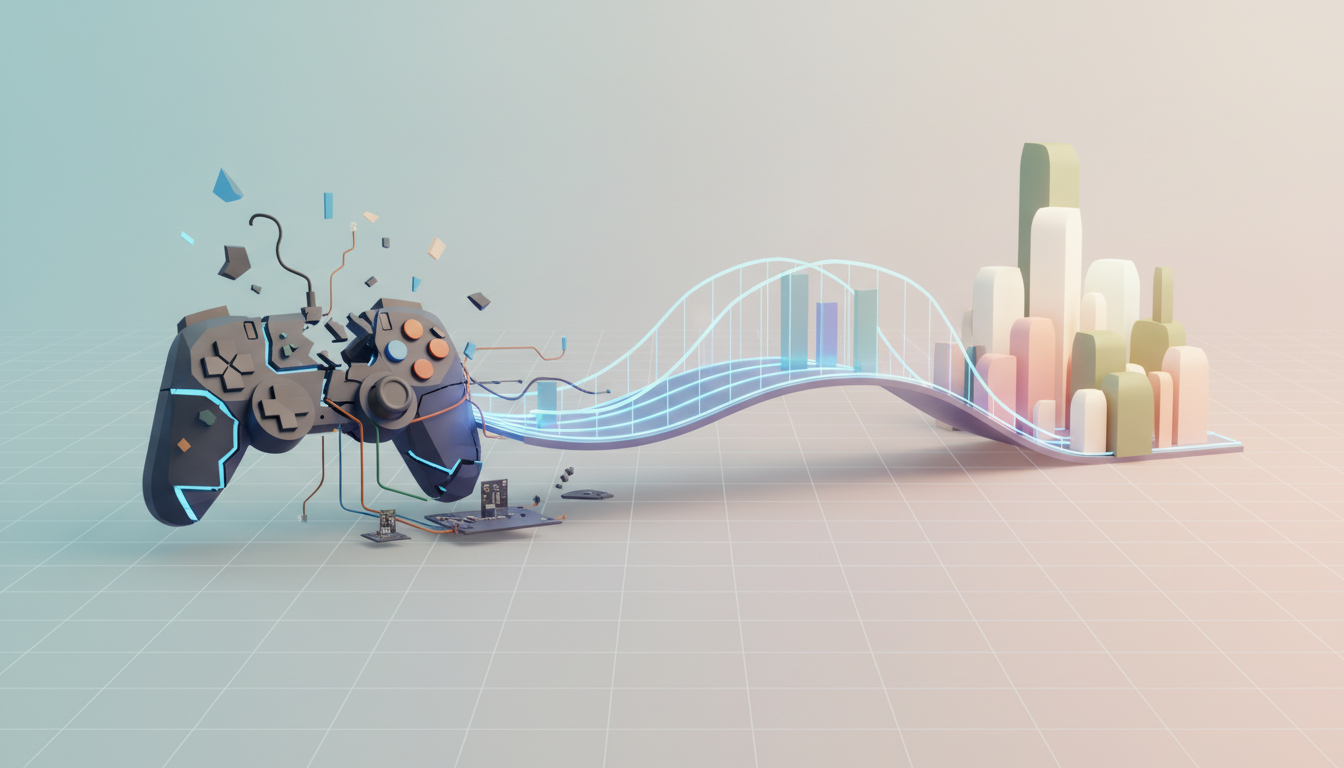
Let me show you how this works in practice. We're currently developing 'Bridge Builders,' a puzzle-platformer where players must cooperate to construct actual bridges—both literal and metaphorical—to help communities overcome divisions.
Using the CONNECT framework:
- Community: Players can only succeed by combining their unique abilities and sharing resources
- Organic: Progression is based on mastering collaboration skills, not grinding or time pressure
- Narrative: Each level explores real-world scenarios where communities overcame challenges through cooperation
- Natural: Chapters conclude with reflection prompts and clear achievement celebrations
- Empathy: Players rotate through different character perspectives, each with unique limitations and strengths
- Choice: Bridge designs have long-term consequences for the virtual communities players are helping
- Transparent: All game mechanics are explained clearly, with no hidden monetization or engagement tricks
The Ripple Effect: What Success Really Looks Like
Here's what gets me up every morning (besides the alarming amount of cold brew I consume): we're starting to see the ripple effects of connection-focused design beyond our own projects.
Last month, I spoke at the Game Developers Conference about ethical design principles. Three separate indie developers approached me afterward with prototypes that prioritized player wellbeing over engagement metrics. A major publisher reached out asking if we'd consult on making their existing titles more 'human-centered.' Even my old mobile gaming company has started incorporating 'psychological wellness checkpoints' into their design process.
But the most meaningful feedback comes directly from players. Sarah, a 34-year-old teacher from Oakland, told me that playing Neighborhood Navigator helped her overcome social anxiety that had worsened during the pandemic. Marcus, a retired engineer, said the game rekindled his interest in community involvement and led him to volunteer with local urban planning committees.
These aren't isolated cases. Our player surveys consistently show that 85% of participants report applying skills learned in our games to real-life situations. That's not just engagement—that's transformation.
"The most successful games don't just capture attention—they cultivate it, helping players develop focus, empathy, and connection skills they can use long after the screen goes dark."
Your Turn: Actionable Steps for Ethical Game Design
Whether you're a fellow game designer, someone considering entering the field, or just a gaming enthusiast who wants to support better practices, here's how you can contribute to this movement:
For Aspiring Designers:
- Start with 'why' before 'how' - Before designing any mechanic, ask: 'What positive change do I want this to create in players' lives?'
- Playtesting with purpose - Don't just test for bugs or balance; observe how your game affects players' moods, social interactions, and self-perception
- Study psychology, not just programming - Understanding human motivation and behavior is more valuable than mastering any game engine
- Build for your community - Create games that address real challenges in your local area or demographic
For Existing Developers:
- Audit your engagement systems - Identify which mechanics rely on FOMO, addiction, or exploitation. Can you replace them with intrinsic motivation?
- Implement wellness features - Add natural break points, progress reflection, and tools that help players maintain healthy gaming habits
- Measure what matters - Track player wellbeing metrics alongside traditional KPIs like retention and revenue
- Listen to your community - Regular surveys about how your game affects players' lives outside of gaming
For Players and Advocates:
- Vote with your wallet - Support games that prioritize player wellbeing, even if they're less flashy than exploitative alternatives
- Share positive examples - When you find games that make you feel good about yourself and your relationships, recommend them loudly
- Engage in conversation - Ask developers about their design philosophy; demand transparency about engagement mechanics
- Create community spaces - Start discussion groups focused on ethical gaming, both online and in your local area
The Future We're Building Together
I want to paint you a picture of where we're headed. Imagine opening a game store—digital or physical—where every title comes with a 'human impact rating' alongside graphics and gameplay scores. Where parents can confidently choose games that will help their kids develop emotional intelligence and social skills. Where adults can unwind with experiences that leave them feeling more connected to their communities and better about themselves.
This isn't naive optimism—it's an achievable future if we commit to changing how we define success in interactive media. The technology exists. The research supports it. The audience is hungry for it. What we need now is the courage to prioritize long-term human flourishing over short-term profit margins.
Pixel & Purpose is just one small studio in a massive industry, but every revolution starts with individuals willing to try something different. We're proving that ethical design isn't just morally superior—it's financially viable and creatively fulfilling.
The gaming industry has spent decades mastering the art of capturing attention. Now it's time to master the art of cultivating it, helping players develop skills and connections that enrich their lives far beyond the screen.
Want to join this movement? Start by examining your own relationship with games. What experiences have genuinely improved your life? Which ones have you felt guilty about afterward? Share those observations with developers, support studios that align with your values, and most importantly, demand better from an industry that has the power to shape how billions of people think, feel, and connect.
Because at the end of the day, we're not just designing games—we're designing the social and emotional tools that will help humanity navigate an increasingly complex world. And that's a responsibility I don't take lightly.
The pixels are just the beginning. The purpose is everything.
Ready to connect? Follow Pixel & Purpose for behind-the-scenes insights into ethical game development, resources for designers who want to prioritize human wellbeing, and updates on projects that are changing how we think about interactive media. Let's build bridges, not just games.